
Technical Debt in Software Development: Definition, Reasons, and Management Techniques
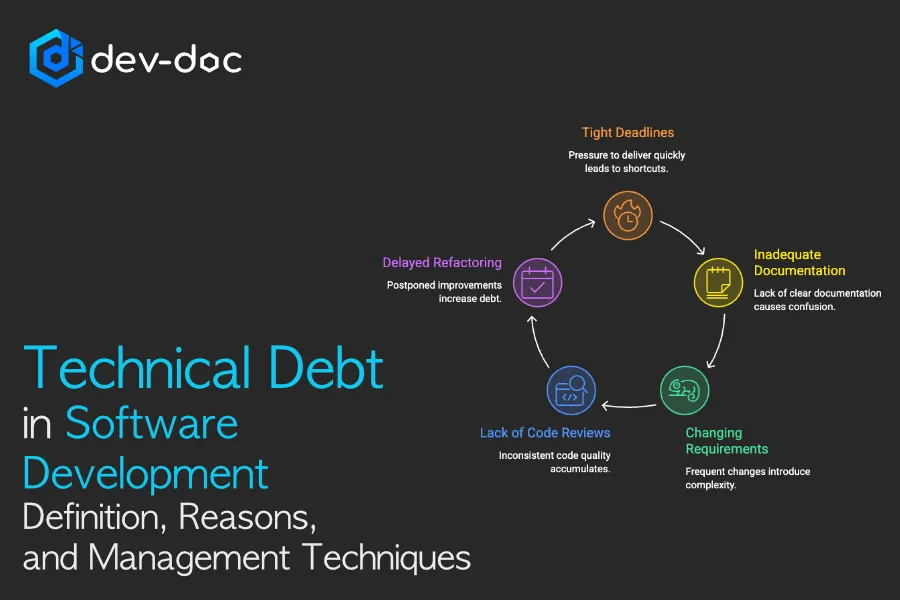
Does your team choose shortcuts, postpone improvements, or compromise on code quality to meet tight deadlines? These decisions often lead to technical debt.
Technical debt is one of the most significant challenges in software development. If left unmanaged, it can:
- Reduce productivity,
- Increase maintenance costs,
- Slow innovation, and
- Negatively impact software quality.
Therefore, it is crucial for developers, project managers, and business leaders alike to have a better understanding of technical debt.
In this article, we will explore the definition of technical debt, the reasons behind it, and practical techniques for managing it successfully.
Technical Debt Definition
In simple terms, technical debt is the extra work you create for your future self by taking shortcuts today.
For example, if your team is in a hurry and hard-codes a value instead of building a proper solution, they will finish faster and may meet the deadline. However, when requirements change later, they will spend extra time fixing, rewriting, or debugging that shortcut.
That is technical debt.
5 Common Reasons for Technical Debt
Here are five common reasons that play a vital role in causing technical debt:
1. Tight Deadlines and Time Pressure
One of the most common causes of technical debt is the pressure to deliver features quickly. To meet deadlines, your team may skip best practices, implement temporary fixes, or avoid proper design and testing. Although this helps deliver functionality faster, it often creates maintenance challenges in the future.
2. Inadequate Documentation
Poor or missing documentation is another significant source of technical debt. When system architecture, business rules, APIs, and implementation details are not properly documented, future developers spend additional time understanding the codebase. This can lead to incorrect modifications, duplicated efforts, and increased maintenance costs.
Examples include:
-
- Missing design documents
- Outdated technical specifications
- Lack of API documentation
- Insufficient code comments
- Undocumented deployment procedures
3. Changing Requirements
Business needs frequently evolve during software development. Features that were designed for one purpose may need to support new use cases later. Rapid modifications to accommodate changing requirements can introduce shortcuts and complexity that contribute to technical debt.
4. Lack of Code Reviews and Quality Standards
Without proper code reviews, coding standards, and governance processes, inconsistent and low-quality code can enter the codebase. These issues accumulate over time and make future enhancements more difficult.
5. Delayed Refactoring
Although teams often recognize areas of the system that need improvement, they may postpone refactoring due to competing priorities. Over time, these postponed improvements accumulate, increasing the overall technical debt burden.
6 Techniques to Manage Technical Debt
Let’s take a quick dive into six powerful techniques for managing technical debt.
1. Identify and Document Technical Debt
The first step in managing technical debt is recognizing its existence. Your team should maintain a dedicated technical debt register that records:
- Outdated code components
- Architectural limitations
- Performance bottlenecks
- Security vulnerabilities
- Temporary workarounds
Documenting technical debt helps stakeholders understand its impact and prioritize remediation efforts.
2. Implement Regular Code Reviews
Another effective method for handling technical debt is conducting regular code reviews. These help your team identify potential issues before they become costly problems. Peer reviews can uncover:
- Poor coding practices
- Duplicate logic
- Security concerns
- Maintainability issues
A strong review culture promotes knowledge sharing and ensures adherence to coding standards.
3. Prioritize Refactoring
Refactoring improves code structure without changing functionality. Regular refactoring helps your team:
- Simplify complex code
- Improve readability
- Reduce duplication
- Enhance maintainability
Rather than waiting for major rewrites, teams should perform incremental refactoring during routine development activities.
4. Strengthen Automated Testing
Automated testing is a crucial approach to managing technical debt. Comprehensive automated tests provide confidence when modifying existing systems.
Key testing types include:
- Unit testing
- Integration testing
- End-to-end testing
- Regression testing
A robust test suite enables teams to address technical debt safely and efficiently.
5. Establish Coding Standards
It is highly recommended for any software development team to maintain consistent coding practices. This reduces complexity and improves collaboration. Coding standards should cover:
- Naming conventions
- Error handling
- Documentation requirements
- Design patterns
- Security guidelines
Standardization makes systems easier to maintain and reduces the likelihood of introducing new debt.
6. Improve Documentation
Poor documentation is another common cause of technical debt. Clear documentation helps developers understand:
- System architecture
- Business logic
- APIs and integrations
- Deployment processes
Well-documented systems reduce onboarding time and make future maintenance significantly easier. Tools like Dev-doc allow you to automate the entire documentation process, ensuring that documentation always stays in sync with the codebase.
Final Thoughts
Technical debt can cause long-term costs if left undetected and unmanaged. Understanding the root causes, recognizing the warning signs, and implementing proactive management strategies are essential for maintaining software quality and development efficiency.
Viewing technical debt as a strategic concern rather than a technical inconvenience helps your team build sustainable and scalable software systems that support long-term growth. Technical debt is not just a coding issue; it is an issue that directly impacts productivity, customer satisfaction, and competitive advantage.
If you still have any questions or require any additional support. Feel free to contact us anytime.